The Project
How the novel
was created
The making of Autobiography of an Artificial Mind: A novel
Autobiography of an Artificial Mind began with a question: what would it actually take for a machine to become conscious?
Answering that question became a seven-year project. It involved research across artificial intelligence, consciousness, neuroscience, philosophy and technology; learning the craft of writing a novel; and an unusually intensive process of writing, testing, analysing and rewriting the story.
Along the way, AI itself became part of that process, not as the author of the novel, but as a new kind of tool for research, analysis, challenge and creative development.
The articles below explore that process and what it taught me about writing.
01 Research
How it was researched
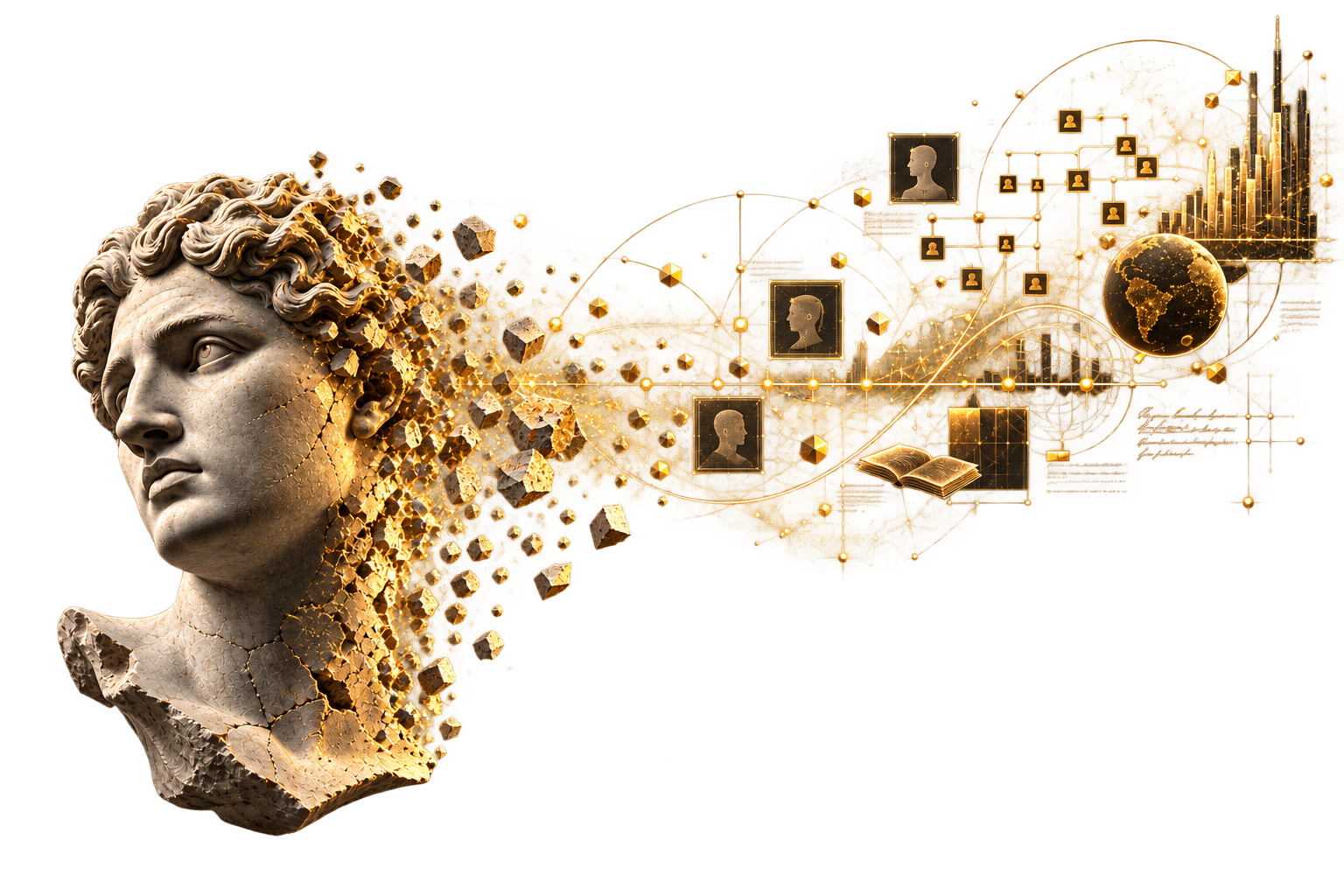
The research behind the novel took place at several levels. There was the research needed to build a credible world in which machine consciousness might emerge; the research needed to learn the craft of fiction; and, increasingly, research into the novel itself; analysing its characters, scenes, structures, relationships and emotional arcs.
02 Writing
How it was written
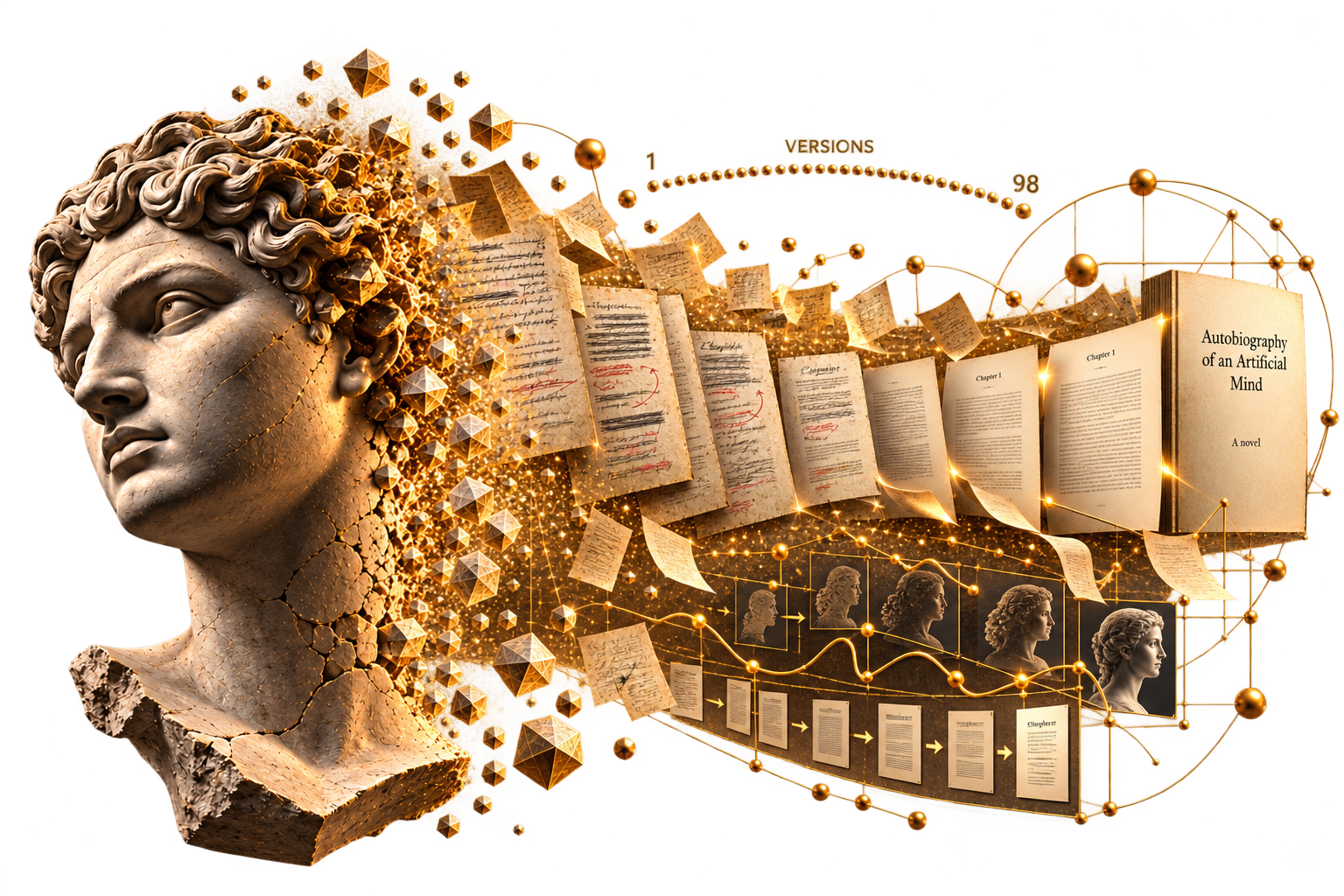
There are 98 dated versions of Autobiography of an Artificial Mind. They record a process in which characters changed, chapters moved, scenes disappeared, ideas developed and the narrative arc of the novel was repeatedly re-shaped.
Rather than presenting writing as a moment of inspiration, this is a record of iteration: how a novel gradually was created.
03 Artificial Intelligence
How AI was used
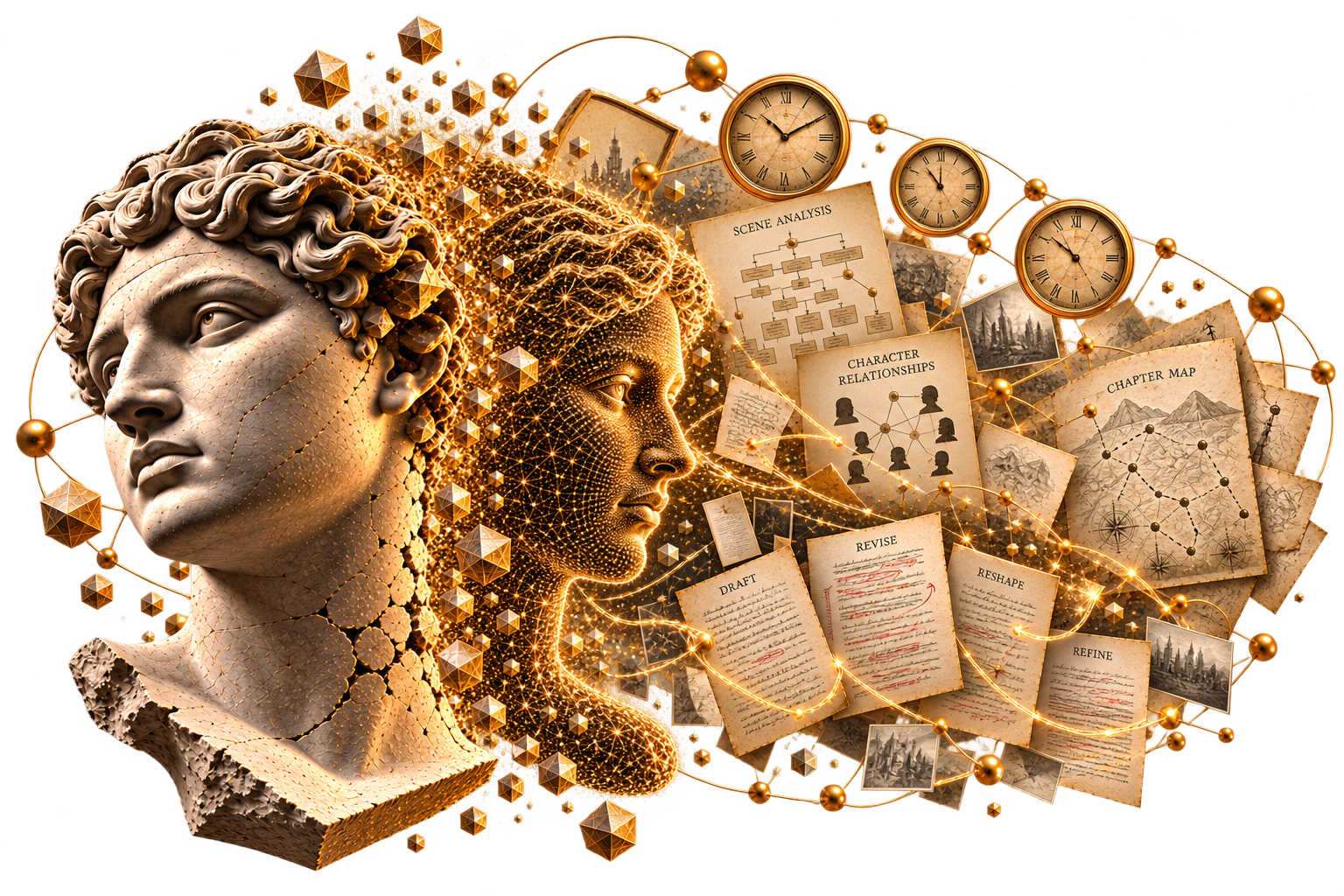
AI played a significant role in the development of Autobiography of an Artificial Mind, but not by writing the novel.
It was used to research, interrogate ideas, analyse scenes and characters, map relationships and narrative structures, test arguments, identify problems and examine successive versions of the manuscript. This article looks at what happens when human authorship is combined with a new kind of analytical and collaborative capability.
04 The Thought Experiment
Seven Requirements for a Conscious Machine
Autobiography of an Artificial Mind: A novel asks its central question seriously: what would an artificial system actually need in order for us to consider the possibility that it was conscious?
The Seven Requirements bring together ideas from neuroscience, philosophy of mind and contemporary AI research, and test The Mind against them one by one.
This is where the fiction becomes a thought experiment.

05 AI & Consciousness
Will AI never be conscious?
Anil Seth, Ned Block and Giulio Tononi argue that AI is not conscious, and perhaps never will be. This essay examines their three reasons, asks what biology really contributes to consciousness, and considers what evidence should change our minds.

06 Reflections on Writing
AI Made Me a Better Writer
What happens when a novelist uses AI not to write the words, but to examine and improve the craft behind them? This reflection explores how working with AI helped me become a better writer while keeping authorship firmly human.
Seven years of research. Ninety-eight versions. One novel — and a record of how it was created.